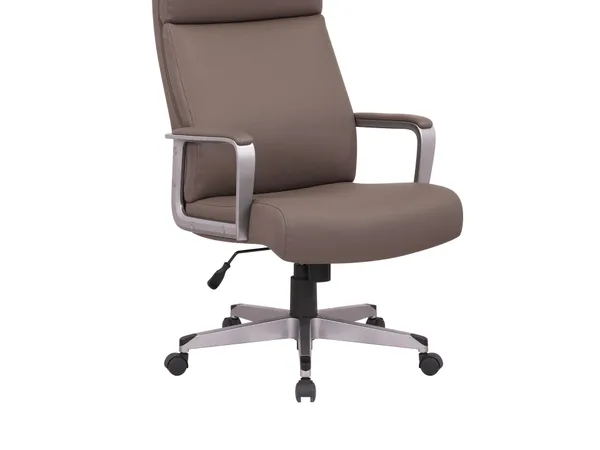
When a new importer writes to us, the real question underneath "can you make this chair" is usually "are you the right size of supplier for me." It is a fair question, and the honest answer is not always yes. There are three kinds of seller you can buy chairs from in China, and they suit different buyers. I will lay out where we sit so you can decide before you waste a week on samples.
The three options, plainly
A very large factory runs on volume. Its unit price is hard to beat, but it earns that price with big minimums — runs in the thousands per model are normal, and a request for 200 mixed chairs gets pushed to the bottom of the queue. A trading company sits at the other end: it owns no production, so it can quote you a little of everything and consolidate orders across factories. That flexibility is real, and for a first small order it can be the right call. The cost is a layer of margin and a layer of distance — your question goes to the trader, then to a factory, then back, and the factory it used last time may not be the one it uses next time. Sourcing guides flag exactly this: with a trader, your second batch can come off a different line than your first.
We are the middle option. As a mid-size maker in Anji we run our own lines for office chairs, dining chairs and leisure and bar chairs, so you talk to the people who actually build the chair, and the second batch comes off the same line as the first. We are not the cheapest on a 5,000-unit task-chair run — a giant plant will beat us there. We are also not as broad as a trader who can source a lamp and a rug in the same email.
Where the mid-size choice pays
The case for a factory our size is control without a wall of MOQ. Because we build across three seating families under one roof, you can put office, dining and leisure chairs in one order and one container without juggling three suppliers — something a single-category giant cannot do and a trader does only by stacking margin. You get a direct line to the floor for spec changes, and you are not big enough to ignore at 200–500 pieces, which is where a lot of new importers actually start.
How to tell which one you are actually talking to
A practical problem for new buyers is that everyone calls themselves a factory. A trading company will happily show you photos of "our workshop" that belong to whichever supplier it used last. The check is not glamorous: ask to see the business licence and confirm the legal name matches the bank account you are asked to pay, ask for a live video walkthrough of the line building your chair, and look the company up in customs-record tools to see whether it actually exports under its own name. A real factory can put you on a video call to the floor in a day; a trader will find reasons to delay or to keep the "factory" at arm's length. We sit on the Anji Chair Association member listing and will send registration documents and a floor walkthrough on request — the verification we walk through in our note on vetting a smaller factory.
The trade-off, stated
Here is the line I give buyers. If you have a proven, single model and you want thousands of them at the lowest possible price, go to a specialist giant — we will tell you so. If you want a little of many unrelated product types for a first test, a good trader may serve you better than we do. But if you want mixed seating, real numbers from the people cutting the foam, and a supplier who remembers your spec on the reorder, that is the spot we are built for. The middle is not a compromise; it is a different bet, and it is the right one for a specific kind of buyer.
Tell us the models, the quantities and whether it is one category or a mix, and we will say honestly whether we are your best fit. Our OEM / ODM page shows how we run a private-label order; start a thread on our contact page or write to [email protected]. We build to BIFMA and EN methods and testing can be arranged per order.