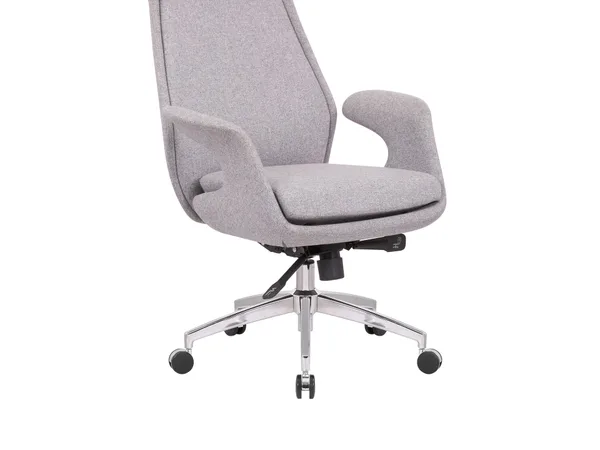
The first sample is the single most important object in the whole transaction, and new buyers routinely under-test it. Whatever you approve becomes the master spec — every chair in the container is then judged against that one unit, not against the photos in your head. So slow down at the sample and run it properly. A broader overview of why sampling before production matters — and what it protects you from — is in the ChairManufacturer.net sampling guide. Here is what we ask buyers to actually do with a Haoguo sample, and what to do with anyone else's.
Measure before you sit
Before you form an opinion on comfort, get a tape on it. Seat height range, seat width and depth, backrest height, armrest height, overall footprint. Write the numbers down and compare them to the spec you agreed, because a chair that feels right but sits 15 mm outside your stated seat height will still fail a buyer who specified a dimension. This is the boring part and it is the part that prevents the expensive argument later. Independent sourcing guides put dimensional checks at the top of the furniture QC list for exactly this reason.
Match the sample to the duty it will face
Comfort on a showroom sit tells you little about how the chair survives its actual job, so judge the sample against the duty, not the showroom. An office task chair headed for an open-plan office where different people drop into it all day needs a gas lift and base built for that — check the cylinder class stamp and whether the base is the nylon or aluminium you ordered. A dining chair pulled in and out across a tile floor lives or dies on its joints and leg-tip wear. A leisure swivel is judged on the recline feel and the frame under the upholstery. Bring the sample's intended use to the test bench: load it the way its users will, not the way a careful buyer in a quiet room would. The mismatch between a gentle showroom sit and real daily duty is where a "great sample" quietly hides the fault that shows up in month three.
Then sit, recline, lock, roll
A photo never catches a function fault. On the sample, run every mechanism: drop into the seat to feel the foam, recline and lock the tilt through its range, work the gas lift up and down and leave it loaded for a few minutes to check it does not sink, swivel it, and roll it on a hard floor and on carpet if your market uses both. Check the stitching lines, the foam edge, the caster fit, and whether the base shows any flex under a heavy person. Take photos and a short video — they become your reference when you compare the production units against this approved master.
Check the parts a photo cannot show
Beyond the obvious mechanisms, the faults that turn into warranty claims hide in the components. Look under the seat: is the gas lift stamped with a class and a test reference, and does it match what you ordered? A "Class 4" claim with no stamp is just a word. Turn the chair over and check the base material — nylon or aluminium as specified — and look for thin spokes or moulding flash that signals a base run thin to save resin. On an upholstered dining or leisure chair, run a hand along the foam edge and ask for the foam density in kg/m³; a soft single-density foam feels fine on a fresh sample and compresses within a year. None of this is exotic, but new buyers skip it because the sample looks good sitting in the room. The sample looking good is exactly the trap.
The trap: the hand-built sample
Here is the trade-off, and it is the one that catches first-time importers. A sample is often partly hand-finished, so it can be a little better than what a production line will hold — tighter stitching, a more careful trim. A good factory wants that gap to be small; a weak supplier lets it be large and then "the sample was great, production was not" becomes your problem. The defence is not to distrust every sample. It is to write the sample's measured specs and material details into your order as the agreed standard, and to book an inspection on the production run against that master. Approving a sample on feel alone, with nothing written down, is how a great sample turns into a mediocre container. Certificates do not fix this either — a test report is not a substitute for checking the goods, a point we make in our note on vetting a smaller factory.
We build our chairs to BIFMA and EN test methods and we are glad to have your sample tested before you commit — testing can be arranged per order, and a fault found on a sample is cheap compared with one found on a container. To brief us on a sample or get our sample-spec sheet, write through the contact page or to [email protected]. The OEM / ODM workflow shows where the sample sits in the schedule.