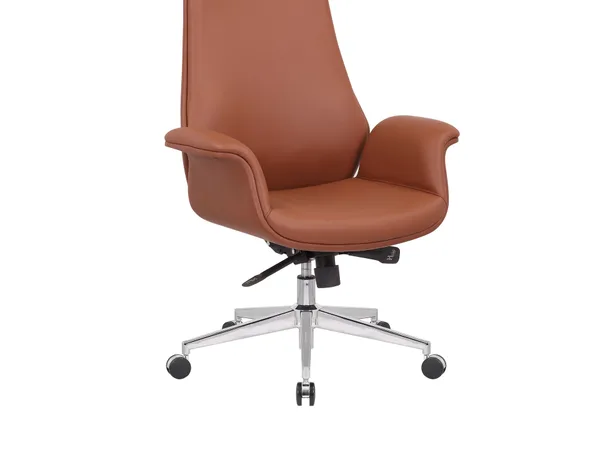
Buyers often assume each chair type needs its own supplier — office from one factory, dining from another, leisure from a third. For a lot of importers that is three times the admin for no good reason. Because we build all three families in Anji, you can buy them together, and there is a genuine logistics case for doing so. There is also a real catch. Both deserve a straight answer.
The case for mixing
The first argument is freight. Consolidating mixed goods into one buyer's shipment cuts your freight bill meaningfully — logistics providers put buyer's-consolidation savings in the range of 15–25% from container freight station to port, and more door-to-door, versus shipping each category separately. With chairs, which cube out fast, filling one box with a sensible mix beats running three half-empty shipments.
The second argument is timing and paperwork. One order means one production schedule, one inspection booking, one bill of lading and one customs entry. For a retailer planning a coordinated launch, mixed-category consolidation also means the task chairs, the dining sets and the lounge chairs arrive together rather than dribbling in and wrecking your merchandising plan. One supplier who can build the mix removes a whole layer of coordination.
The catch, stated honestly
Here is the trade-off. Consolidation only pays when every line runs in sync. If your dining chairs need an extra week of upholstery work, that week now delays the office and leisure chairs too, because they are sailing in the same box. A single slow component can hold the whole mixed order hostage — logistics writers say this plainly, and we have lived it. The defence is to schedule the mix around the slowest item from the start, not to discover the bottleneck at the end. We build the production plan backward from whichever category takes longest, so the fast items wait by design rather than the slow one panicking the whole order.
Packing a mixed box without crushing the soft items
There is a second, quieter catch that only shows up when you actually load a mixed box. Office task chairs, dining chairs and leisure swivels do not stack the same way. A leisure swivel with a wide upholstered shell is the bulky, easily-marked item; a flat-packed dining chair is the dense rectangle that wants to go on the bottom. Load it the wrong way and you either crush a lounge chair under a stack of dining cartons or waste a whole layer of cube around an awkward shape. So a mixed order needs a stacking plan, not just a carton count — heavy and flat low, light and bulky high, dunnage where the shapes do not nest. We map that before the goods leave the floor, because a scuffed leisure chair that travelled fine in theory is still a customer complaint in practice.
How we plan a mixed load
When we quote a mixed order we send a single loading plan: CBM per carton for each category, the count that fills a 40HQ, a stacking order, and a build schedule that lines the categories up to finish together. If one category is genuinely on a longer lead — a new dining frame, say — we will tell you to either pull it into a later shipment or accept that it sets the sailing date. What we will not do is let an unspoken bottleneck surprise you at the dock. For the sizing of those minimums per category, see our small-MOQ mixed seating note, and for the sample stage that comes first, our sample-evaluation note.
One last point on whether to mix at all. If your categories sell into genuinely different channels on different timelines — office chairs to a contract reseller, leisure chairs to a seasonal retailer — forcing them into one box to save freight can cost you more in held inventory than it saves in shipping. Mixing pays when the goods land together and move together. When they do not, ship them separately and do not let a freight saving dictate your stock plan. We will tell you honestly which case you are in.
Send us the categories and quantities you want to combine and we will come back with one plan, one timeline and one honest flag on whatever item is the long pole. Reach us at the contact form or [email protected]; our OEM / ODM page shows how a catalog mix is run. We build to BIFMA and EN methods; testing can be arranged per order.