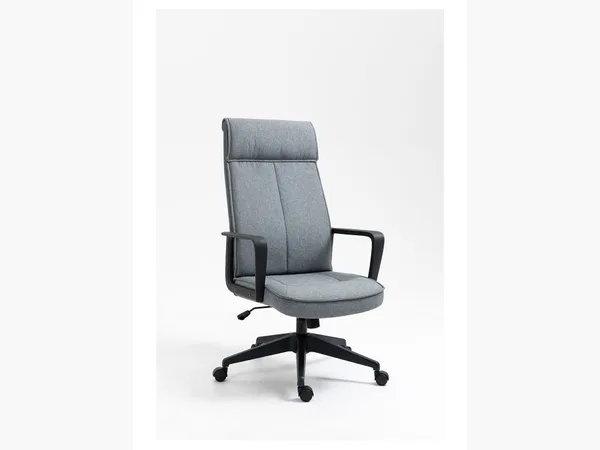
The complaint sounds like a mystery: "the new chairs are not the same as last year's." The buyer is sure, the factory is defensive, and both are usually right. Nobody decided to change the chair — and the chair changed anyway. That is reorder drift, and after enough repeat orders you learn it is not a quality problem in the usual sense. It is a process problem, and it has a boring, effective fix borrowed from manufacturing at large: engineering-change discipline, usually shortened to ECN.
How a chair drifts when nobody is looking
Walk through a year in the life of a chair spec. The caster supplier discontinues the wheel you approved and offers a "direct equivalent" with a slightly harder tread. The foam house reformulates and the same nominal density now compresses differently at the front edge. A fabric article number survives but the mill's new lot reads half a shade off under warehouse lights. A line lead swaps a bracket for a stronger one — an improvement, genuinely, but now the back flexes differently. Four small changes, each reasonable, none reported, and batch two is a different chair that still matches the spec sheet on paper.
The uncomfortable truth: most drift enters through the factory's suppliers, not the factory. Components churn constantly — end-of-life notices on casters, lifts and trims are routine — and a factory without a discipline for catching and recording that churn passes it silently into your product.
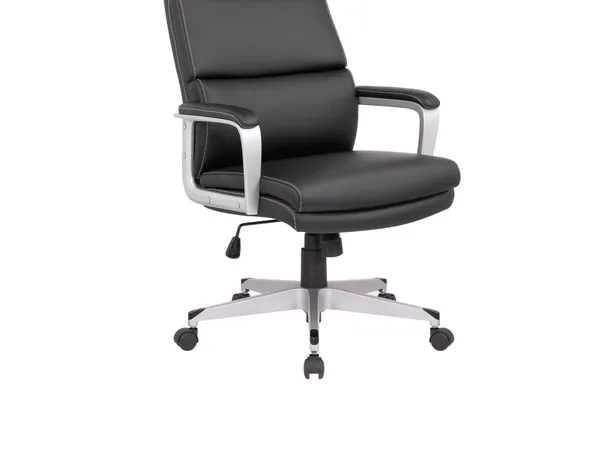
What ECN discipline actually looks like
An engineering change notice is just a written record that says: this part is changing from X to Y, on this date, for this reason — and here is who approved it. Small factories often treat that as big-company bureaucracy. It is not; it is four habits, and you can ask any supplier whether they have them.
1. A frozen reference, physically kept
The approved first-batch unit stays in the factory, tagged, with its full bill of materials recorded — not "black caster" but the supplier and part number of that caster. Drift is invisible without a fixed point to measure from. (This is the production sibling of the sample discipline in our first-sample note: the sample you approved is the contract, so it has to survive as an object.)
2. No silent substitutions, in writing
The rule that matters most: no component change ships without notice to the buyer, even when the new part is better. "Better" is a judgement made from inside the factory; whether your market notices a harder armpad is a judgement only you can make. Put the notification duty in the purchase contract — a supplier who resists that clause is telling you how reorders will go.
3. A change log per model
One page per chair: date, part, old, new, why, who approved. When a complaint arrives in month nine, this log answers in five minutes what otherwise becomes a week of archaeology and blame. It also makes the honest conversation possible — sometimes a change was forced (a part truly gone end-of-life) and the log shows the substitute was agreed, not smuggled.
4. First-article check on every reorder
Before a repeat batch runs, the first unit off the line gets compared against the frozen reference — dimensions, components, finish, feel — and photographed alongside it. It costs an hour. It is the single highest-value hour in a repeat order, because it catches a year of accumulated drift before it multiplies by four hundred.
The buyer's side of the bargain
Drift is not only a factory failure; buyers create it too. If you reorder by emailing "same as last time," you have made the old invoice your spec, and an invoice does not record foam density or caster part numbers. The reorder PO should reference the spec version — "as per approved reference sample HG-1234, change log through ECN 003" — so that "the same" is a defined object, not a memory. And when you request a change yourself (new colour, cheaper fabric), let it go through the same log. Half the drift we are blamed for on the second reorder traces to an undocumented "small tweak" the buyer asked for on the first.
Reorder timing matters too. Drift accumulates with time, not with volume — a repeat order placed four months after the first usually runs on the same component stock and the same supplier lots, while one placed fourteen months later crosses a year of upstream churn. If you know a reorder is probable, say so when the gap starts, not when the PO lands: a factory that expects the repeat can hold or re-book the long-lead components, and the first-article check at the line becomes a confirmation instead of a negotiation.
The honest trade-off
Change control costs friction. Notices take days you may not feel you have; refusing silent substitutions means occasionally we stop a line to wait for your sign-off on a caster you will never consciously notice. For a one-off promotional buy, that overhead is arguably wasted. For a chair you intend to sell under your brand for years — where batch three sits in a showroom next to batch one — it is the cheapest insurance in the order. We run our repeat office and leisure programs this way because the alternative is the mystery argument, and nobody wins that one.
If you have a model you expect to reorder, tell us up front through the contact form or [email protected] — we will set up the reference unit, the BOM record and the change log with the first batch, where it costs nothing. We build to BIFMA and EN methods and testing can be arranged per order; the OEM / ODM page shows where the spec freeze sits in the workflow.